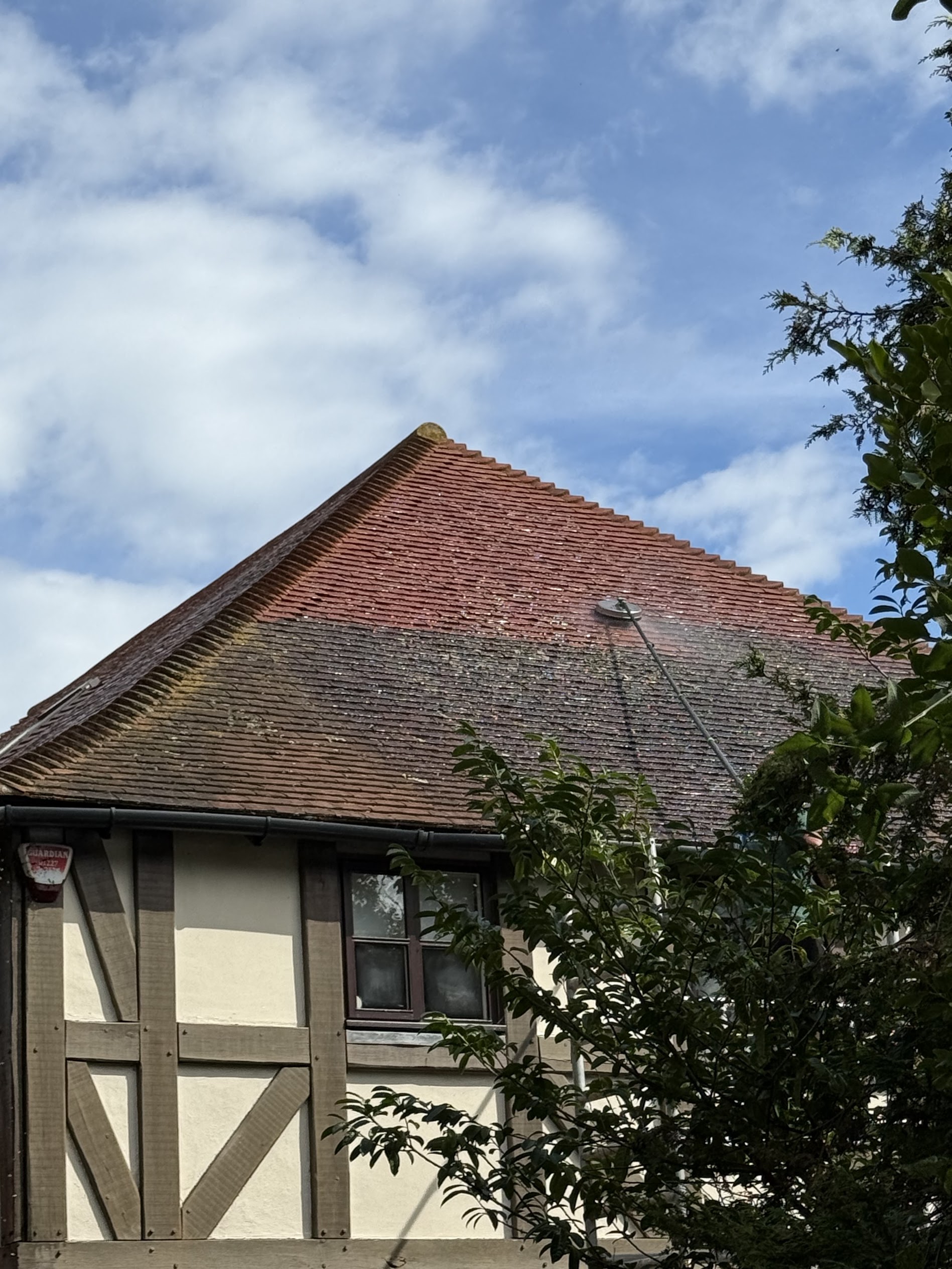
Roof cleaning removes moss, algae and built-up grime to keep your roof looking good and well maintained. The right time, method and a reputable cleaner all make a big difference.
Cleaning can damage a roof when the method does not suit the covering. The wrong pressure, the wrong chemical, or an operator walking where they should not can crack tiles, strip protective granules and force water into the roof structure. Understanding the risks before you book helps you ask the right questions and choose a contractor who takes them seriously. Coverage varies by region — from roof cleaning in Leicestershire and Rutland to Kent and the South-East, our contractors only quote for roofs they can inspect locally.
Can roof cleaning damage tiles?
Yes — roof cleaning can damage tiles, and it happens more often than most contractors admit. The damage is rarely dramatic. It is usually incremental: granules stripped from a concrete tile by a jet that was too close, a clay plain tile cracked by a boot that should not have been there, or water forced under a lap by pressure that was higher than the covering could take. Over months and years, that incremental damage shortens the roof's life and creates the very leaks the cleaning was meant to prevent.
The question is not whether roof cleaning can damage tiles — it is whether the contractor you hire understands which methods suit which coverings and chooses accordingly. A competent contractor who matches the method to the material and keeps their weight off fragile tiles can clean a roof safely. One who pressure-washes everything and walks wherever they like cannot.
Where the real risks lie
The four main risks are well documented across manufacturer guidance and trade body advice.
- High pressure forcing water under tile laps and into the felt or membrane below — the most common cause of post-clean leaks.
- Operators walking on fragile or brittle coverings, especially old clay tiles and slate, which crack under body weight.
- High pressure stripping the protective granules from coated concrete tiles, exposing the bitumen backing and shortening the tile's life.
- Chemical run-off damaging plants, ponds, rainwater collection systems or wildlife if the application is uncontrolled.
How the risks differ by material
Concrete interlocking tiles are the most robust covering and tolerate the widest range of methods, but they are not indestructible. High pressure held too close will strip granules from a coated tile, and old or porous concrete can spall under a direct jet. A contractor who pressure-washes every roof because 'concrete is tough' is not thinking about the condition of your specific tiles.
Clay plain tiles are fragile, particularly as they age. Marley's own clay tile guidance warns against both pressure washing and scraping moss from the surface. The tiles crack under body weight, and a jet that lifts moss from a concrete tile will fracture a clay one. Soft washing from ladders or a platform, with manual moss clearance where the manufacturer permits it, is the safer approach for most clay roofs.
Slate is the most fragile covering when it is old. Walking on a weathered slate roof is a gamble — the nails may have corroded, the slate may be delaminating, and a boot on the wrong slate will crack it. Access methods that keep the operator off the roof entirely — telescopic lances, cherry pickers or scaffold towers — are the only safe approach on an old slate roof.
How a good contractor reduces the risk
A contractor who understands tile damage does not just promise that their method is safe — they show you how they manage the risk on your specific roof. The right approach starts with an assessment, not a machine. They identify the covering, its age and condition, any warranty restrictions, and any fragile areas before they commit to a method.
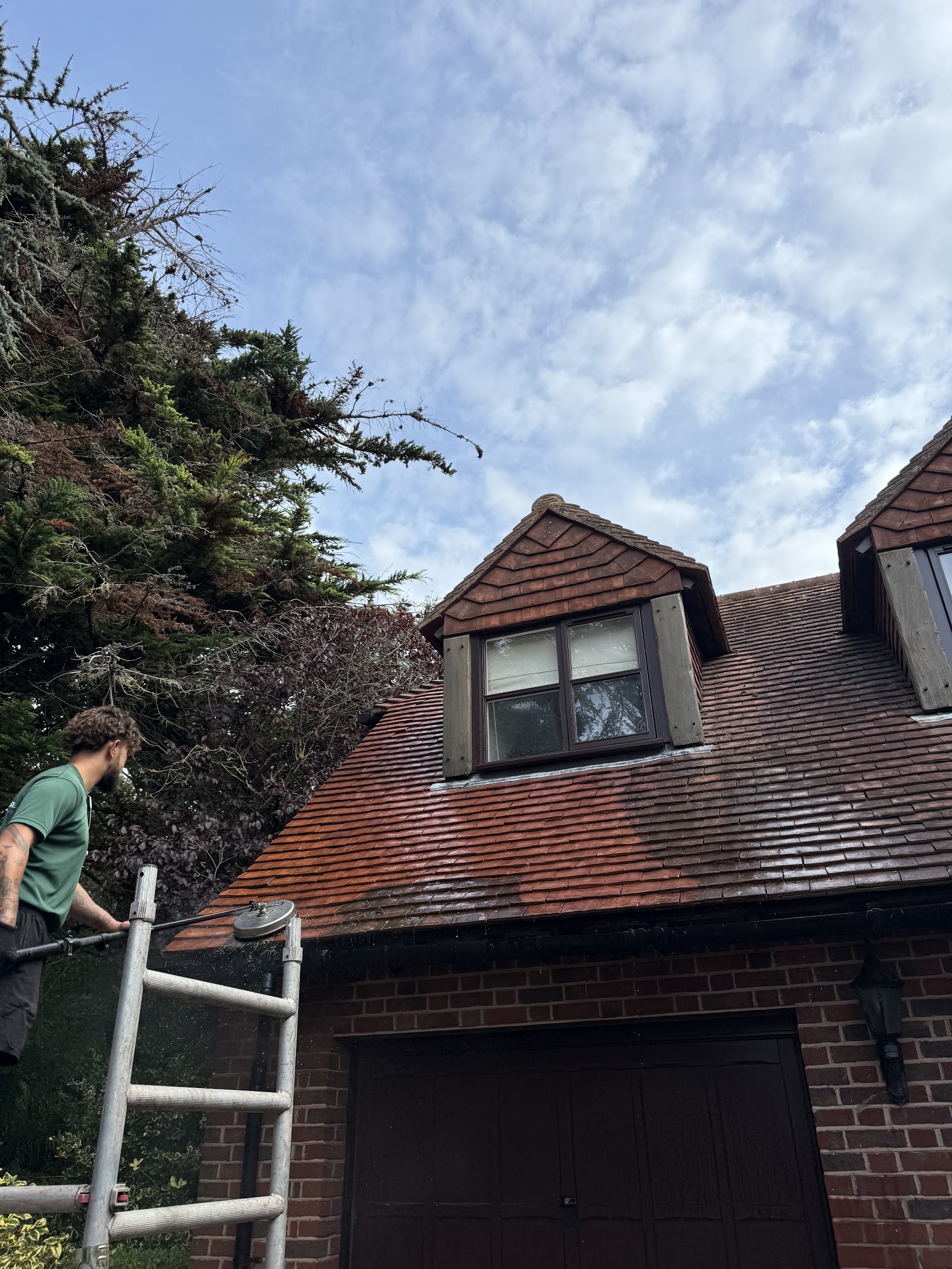
Access is the other half of the answer. The photo above shows a contractor working from an access ladder with a rotary surface cleaner rather than walking the roof — exactly the kind of decision that separates a contractor who understands tile damage from one who does not. Keeping weight off the covering, using low pressure where pressure is used at all, and controlling chemical run-off are the practical steps that turn a risky process into a safe one.
- Assessment before quoting — identifying the covering, its condition and any warranty terms.
- Access equipment that keeps weight off fragile tiles — ladders with stand-offs, towers or platforms.
- Low-pressure or soft-wash methods on coverings that cannot take a direct jet.
- Controlled chemical application with run-off protection for plants, ponds and rainwater systems.
- A written method statement so you can see exactly what will happen on your roof before you agree to it.
What to ask before booking
If you are worried about tile damage, ask the contractor directly. The questions below are not awkward — a competent contractor will answer them without hesitation. Our guide to choosing a roof cleaning company covers these checks and the red flags worth walking away from in more detail.
- What method will you use on my specific covering, and why that method?
- Will you walk on the roof or work from ladders and platforms?
- What pressure will you use, if any — and does the covering manufacturer permit it?
- What happens if a tile is cracked or damaged during the work?
- Can I see your public liability insurance certificate?
FAQs
Get a roof cleaning quote
Compare local, trusted roof cleaning professionals and get a free, no-obligation quote for your home.
One local roof cleaner. No obligation to book.
Related homeowner guides
Roof Cleaning Methods: Soft Washing vs Pressure Washing
Expert UK advice on methods, costs and protecting your roof tiles.
Choosing a Roof Cleaning Company
Expert UK advice on methods, costs and protecting your roof tiles.
Roof Cleaning by Material: Concrete, Clay & Slate
Expert UK advice on methods, costs and protecting your roof tiles.
Written & reviewed by
Andrew Hampton
Roofcleaning.uk editor
Andrew Hampton has spent the last seven years working in the gutter and roof cleaning industry, helping homeowners across the UK understand what a proper clean involves, what it should cost, and how to spot a reliable contractor. He edits every guide on Roofcleaning.uk to make sure the advice is practical, up to date, and written in plain English.
- 7+ years in the gutter cleaning and roof cleaning industry
- Edits and reviews every homeowner guide published on Roofcleaning.uk
- Works directly with approved contractors to keep pricing and methods accurate
Last reviewed 1970 · Roofcleaning.uk editorial team