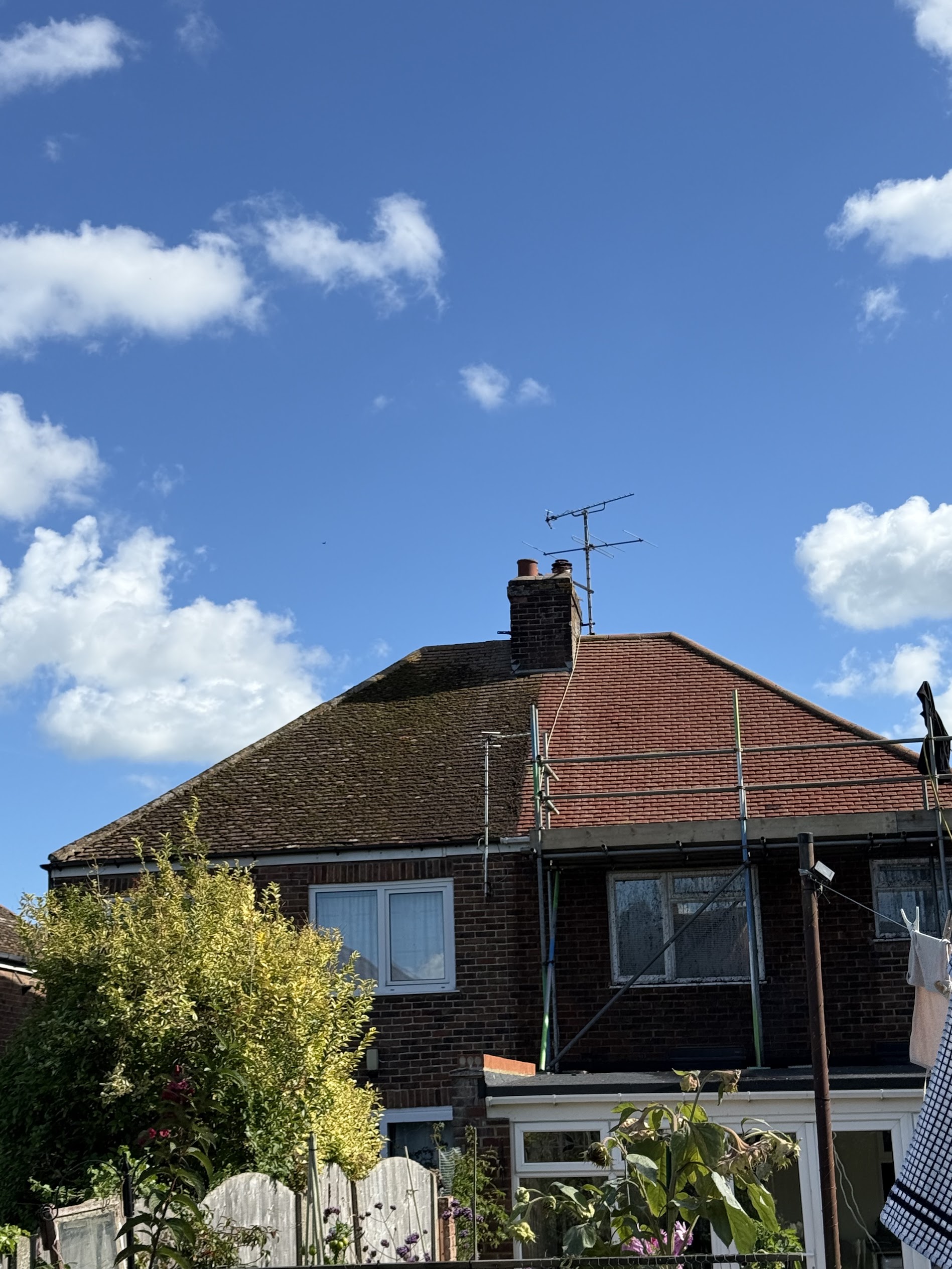
Roof cleaning removes moss, algae and built-up grime to keep your roof looking good and well maintained. The right time, method and a reputable cleaner all make a big difference.
The right roof cleaning method depends on the covering, its condition and the manufacturer's instructions. Low pressure alone does not guarantee a safe process. Ask for an assessment and a written explanation of the proposed method before booking.
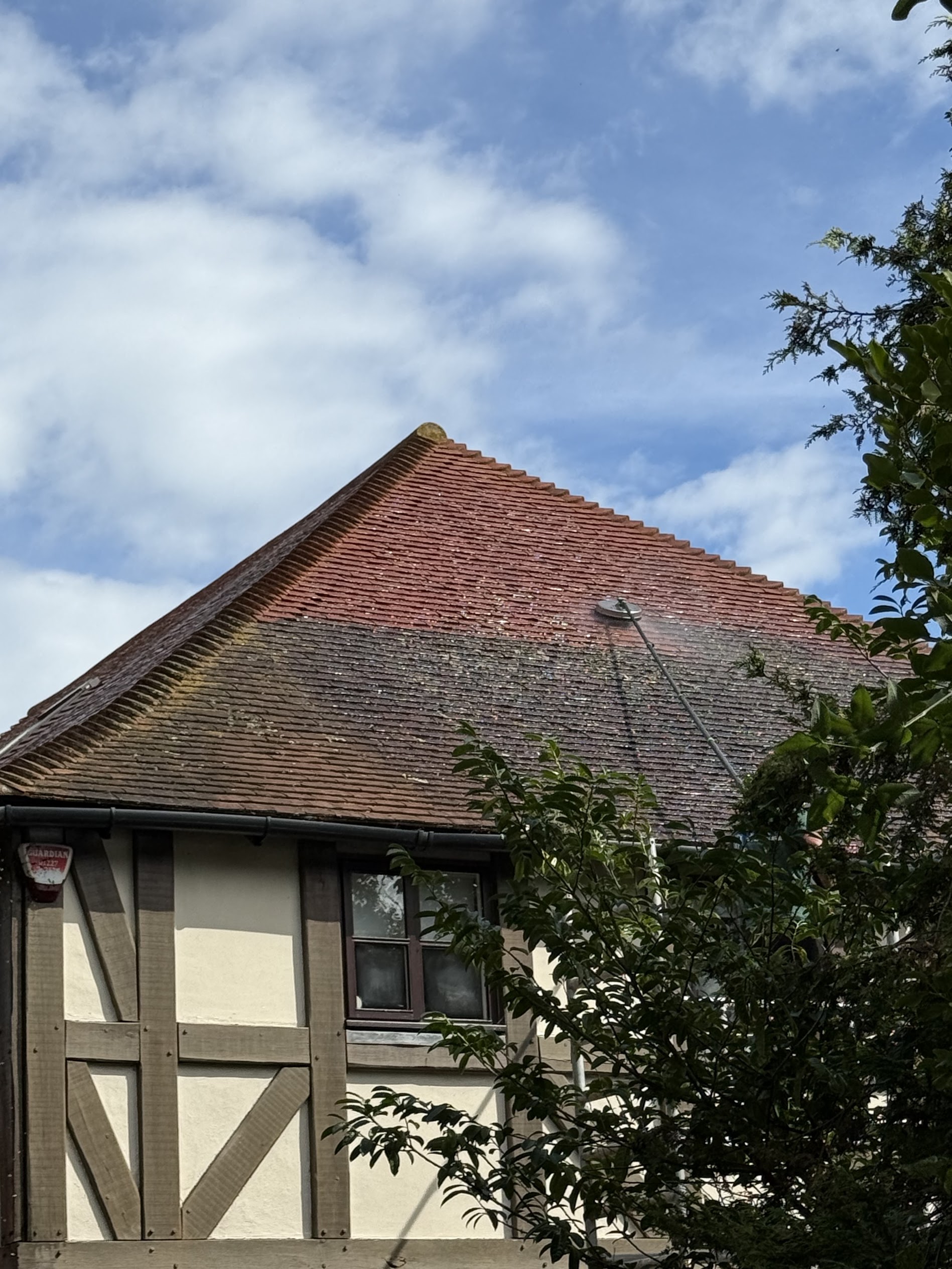
Start with the roof, not the equipment
Identify whether the covering is concrete, clay, slate or a specialist material. Age, condition, repairs and any warranty all matter. A method used on a neighbour's roof is not automatically suitable for yours.
Ask the contractor to explain what needs doing and why. If there are slipped tiles, leaks or fragile sections, arrange the necessary roofing assessment first. Read our homeowner roof cleaning guide for a booking checklist.
What is soft washing?
The term generally describes cleaning using low-pressure application and a suitable cleaning or treatment product. Companies use the term differently, so ask whether their quote includes physical moss removal, treatment, rinsing or a combination.
Check the named product, its proposed use and the precautions. A treatment might continue to change the appearance after the visit, so agree what the roof should look like at completion and what changes are expected later. Do not assume every chemical treatment is harmless to the covering or surrounding property.
What is pressure washing?
Pressure washing uses water force to remove material. NFRC advises against pressure washing for moss removal. Ask for manufacturer guidance rather than accepting reassurance based only on adjustable settings or the operator's experience.
Marley also advises against pressure washing clay tiles. A fast visible result is not enough to establish suitability. Where a contractor proposes water-based cleaning, request the specific permitted method and ask how water and debris will be controlled.
Manual brushing and scraping
Contractors sometimes remove growth physically before treatment. Tool shape, roof access and the material being worked on all affect the risk. Do not treat manual scraping as a universal safe alternative: Marley's clay tile guidance cautions against scraping growth.
Our moss removal guide explains the distinction between removing an obstruction and cleaning for appearance. Ask whether physical removal is needed at all and what alternatives the covering manufacturer recommends.
Steam cleaning and specialist roofs
Steam cleaning uses heated water, but the equipment label does not establish compatibility. Ask about temperature, pressure, distance, roof condition and product guidance. Claims about being gentle need a roof-specific explanation.
Thatch, metal, flat roofing, heritage materials and potentially asbestos-containing coverings need specialist consideration. A generic pitched-tile cleaning package is not a substitute for the correct advice.
See the contractor's approach in this Kent roof cleaning case study, including a site visit and access equipment for awkward areas.
Compare the whole process
| Proposal | What to ask |
|---|---|
| Treatment or soft wash | Which product, permitted use, protection measures and expected timescale? |
| Physical moss removal | Is this permitted on the covering, and how will access and debris be managed? |
| Water or steam cleaning | What manufacturer guidance supports the settings and process? |
| Any method | Who is responsible for damage, drainage, neighbouring property and clean-up? |
Request a quote which describes access, treatment, gutter clearance and clean-up. Our roof cleaning prices guide helps you compare the cost of equivalent scopes.
Use these questions to ask a roof cleaning company when comparing insurance, access arrangements and the written scope.
How long should the result last?
There is no dependable universal regrowth interval. Shade, exposure, surrounding trees, roof material and the work performed all affect the result. A clean roof today is not a guarantee of a fixed number of moss-free years.
Ask whether any guarantee covers appearance, regrowth, workmanship or return treatment, and read the conditions. For maintenance decisions, use our guide to cleaning frequency rather than a fixed sales promise.
Match the proposal to your property
Read roof cleaning by material and tile damage risks. If an array is present, use our solar panel planning guide. Check the proposed product in our biocide treatment guide.
FAQs
Get a roof cleaning quote
Compare local, trusted roof cleaning professionals and get a free, no-obligation quote for your home.
One local roof cleaner. No obligation to book.
Related homeowner guides
Roof Moss Removal: Methods, Costs and When to Act
Expert UK advice on methods, costs and protecting your roof tiles.
Roof Cleaning Cost UK: Prices and Quote Guide
Expert UK advice on methods, costs and protecting your roof tiles.
Roof Cleaning Guide for UK Homeowners
Expert UK advice on methods, costs and protecting your roof tiles.
Written & reviewed by
Andrew Hampton
Roofcleaning.uk editor
Andrew Hampton has spent the last seven years working in the gutter and roof cleaning industry, helping homeowners across the UK understand what a proper clean involves, what it should cost, and how to spot a reliable contractor. He edits every guide on Roofcleaning.uk to make sure the advice is practical, up to date, and written in plain English.
- 7+ years in the gutter cleaning and roof cleaning industry
- Edits and reviews every homeowner guide published on Roofcleaning.uk
- Works directly with approved contractors to keep pricing and methods accurate
Last reviewed 1970 · Roofcleaning.uk editorial team