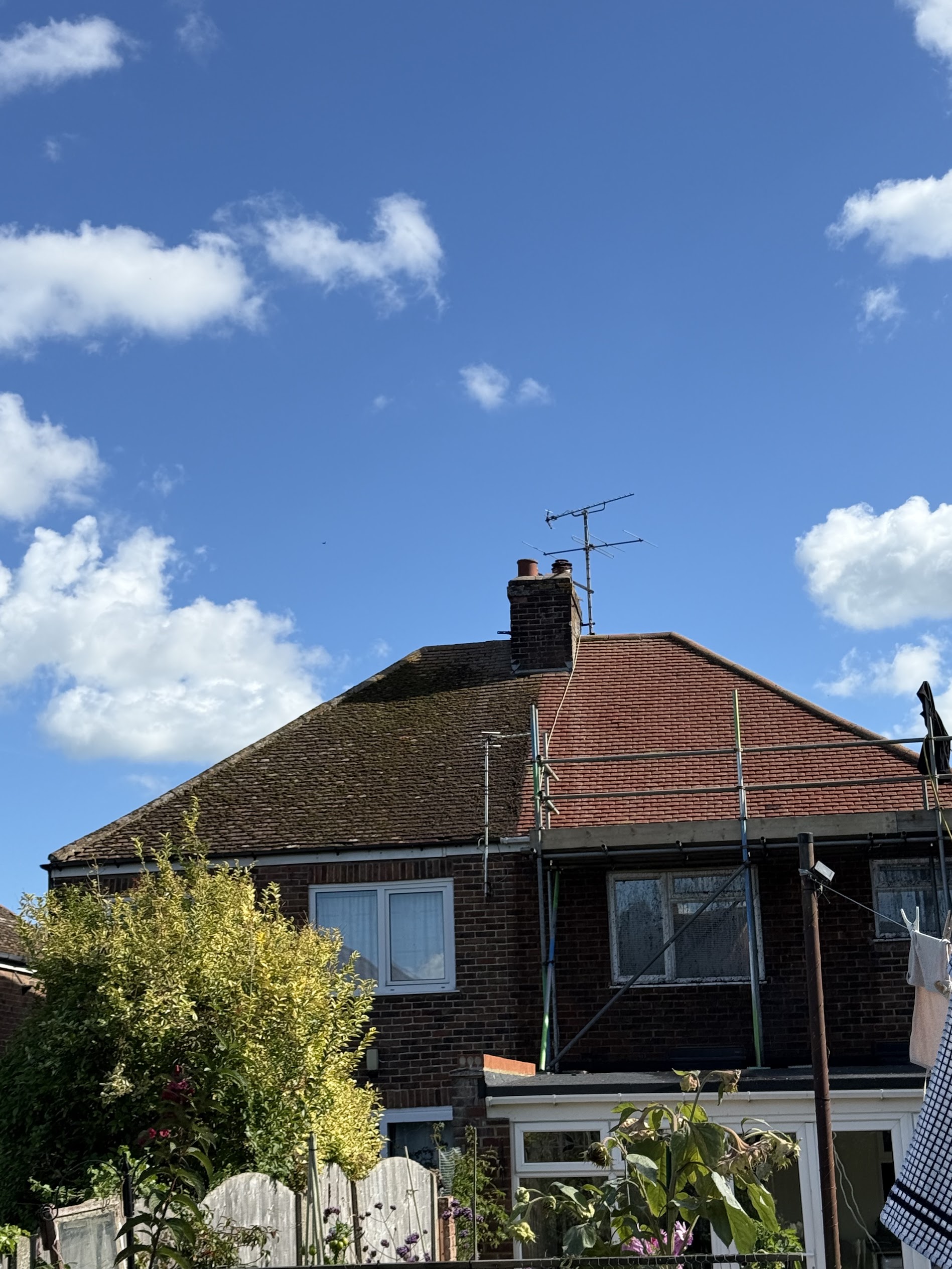
Roof cleaning removes moss, algae and built-up grime to keep your roof looking good and well maintained. The right time, method and a reputable cleaner all make a big difference.
Roof biocide treatment does not work like pressure washing. There is no instant before-and-after on the day — the product kills moss and algae over weeks as the growth dies back, discolours and weathers away. Understanding that timeline is the difference between judging the result fairly and thinking the treatment has failed when it has barely started.
The treatment timeline
A biocide treatment works in three stages, and none of them happen on the day the contractor leaves. The first stage is absorption: the product sits on the tile surface and is absorbed by the moss, algae and lichen that remain after physical removal. This takes a few days to a week, depending on the weather and how wet the growth was when the product was applied.
The second stage is die-back. The treated growth begins to change colour — moss turns from green to brown or orange, algae darkens and lichen crusts begin to crack and lift. This is the first visible sign that the biocide is working, and it typically appears within one to three weeks of application. The third stage is weathering: rain, wind and frost break down the dead growth and wash it off the tiles. This can take a further two to six weeks, depending on how heavy the growth was and how much rain falls.
The full result — a roof where the dead growth has cleared and the tiles look clean — is usually visible within four to eight weeks of treatment. Heavy growth in a damp, shaded position may take longer. Light staining on a well-exposed roof may clear in two to three weeks.
What affects the timeline
Several factors determine how quickly you see results, and they are worth understanding so you can set realistic expectations for your own roof. Shade is the biggest one: a north-facing slope under tree cover stays damper, which means the biocide takes longer to dry and the dead growth takes longer to weather away. A south-facing slope in full sun will clear faster.
Weather matters too. A dry, breezy spell after treatment is ideal — the wind helps lift the dead growth and the dry conditions let the product work without being diluted. Persistent rain in the weeks after treatment slows the process, not because the biocide is washed off (most products bond to the surface within hours) but because the dead growth stays damp and clings to the tiles rather than blowing away.
The amount of growth also affects the timeline. Light algae staining will clear within weeks. A thick mat of moss that has been killed but not physically removed will sit on the roof until weathering breaks it down, which can take a full season. That is why most contractors remove heavy growth physically before applying the biocide — the treatment is a finishing step, not a standalone one.
How to judge the result
The most common mistake homeowners make with a biocide treatment is expecting the roof to look clean on the day the contractor leaves. It will not — it may even look worse for the first week or two as the growth dies back and changes colour. That is the product working, not failing.
Wait at least four weeks before judging the result. Take a photo from the ground on the day of treatment and another at four weeks, six weeks and eight weeks. The comparison will show you the gradual clearing that is hard to see day to day. If the roof has not changed at all after eight weeks, contact the contractor — it may mean the product was applied at the wrong dilution, on too wet a surface, or that a second application is needed.
When to follow up with the contractor
A reputable contractor will tell you what to expect before they leave — the colour changes, the timeline and what the roof should look like at each stage. If they did not, ask. The answers are your benchmark for judging whether the treatment is working.
Follow up if you see no change after four weeks, if the growth appears to be thickening rather than dying back, or if patches of the roof seem to have been missed entirely. A good contractor will return to check the result and, if necessary, re-apply. Our guide to what if roof moss returns covers what to do if regrowth appears sooner than expected.
- Take a photo on treatment day and at four, six and eight weeks to track the change.
- Expect the growth to look worse before it looks better — colour change means the product is working.
- Contact the contractor if nothing has changed after eight weeks.
- Ask about a top-up or re-application if patches were missed.
FAQs
Get a roof cleaning quote
Compare local, trusted roof cleaning professionals and get a free, no-obligation quote for your home.
One local roof cleaner. No obligation to book.
Related homeowner guides
Roof Biocide Treatment Explained
Expert UK advice on methods, costs and protecting your roof tiles.
What If Roof Moss Returns?
Expert UK advice on methods, costs and protecting your roof tiles.
What to Check After Roof Cleaning
Expert UK advice on methods, costs and protecting your roof tiles.
Written & reviewed by
Andrew Hampton
Roofcleaning.uk editor
Andrew Hampton has spent the last seven years working in the gutter and roof cleaning industry, helping homeowners across the UK understand what a proper clean involves, what it should cost, and how to spot a reliable contractor. He edits every guide on Roofcleaning.uk to make sure the advice is practical, up to date, and written in plain English.
- 7+ years in the gutter cleaning and roof cleaning industry
- Edits and reviews every homeowner guide published on Roofcleaning.uk
- Works directly with approved contractors to keep pricing and methods accurate
Last reviewed 1970 · Roofcleaning.uk editorial team