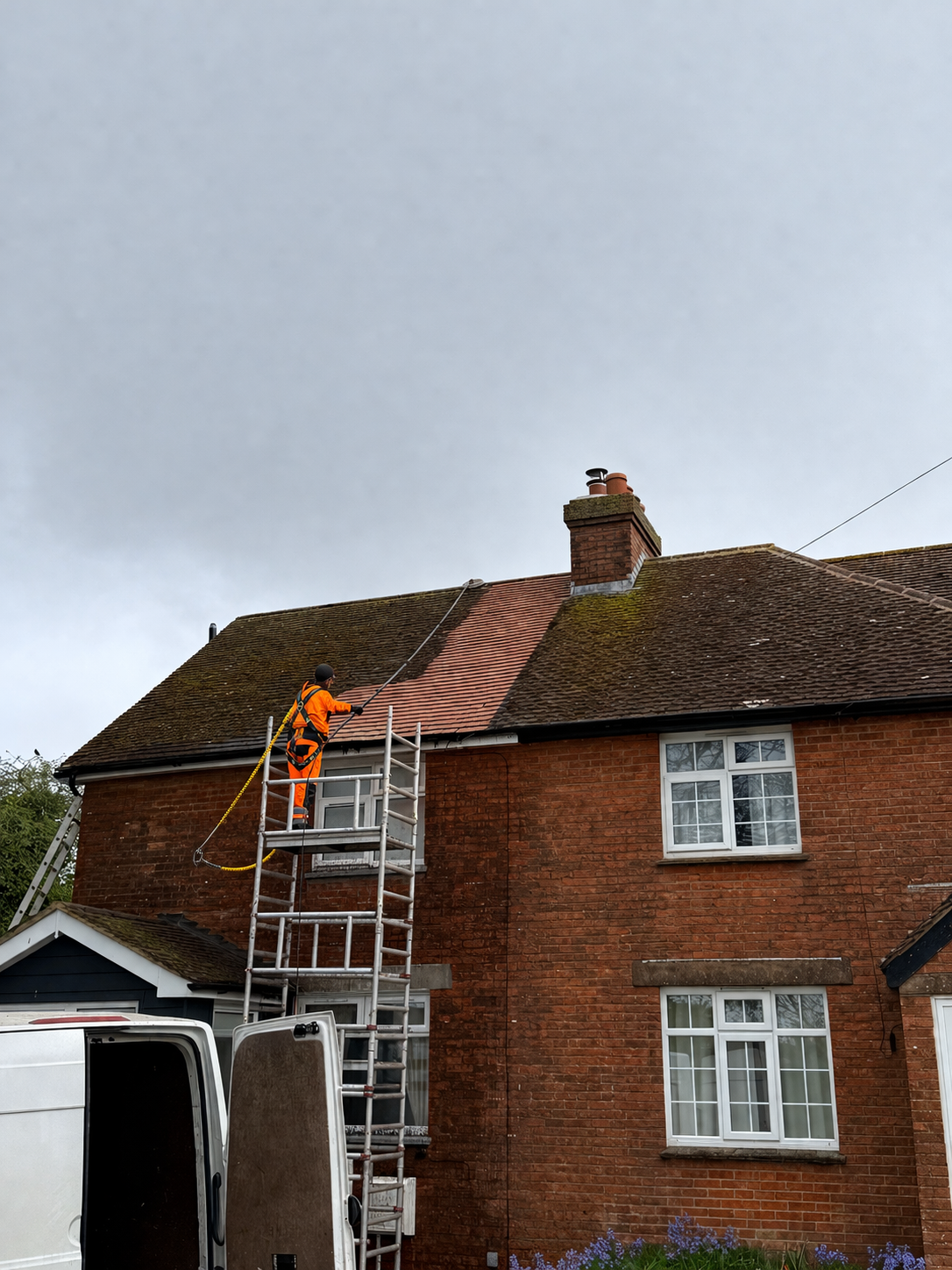
Roof cleaning removes moss, algae and built-up grime to keep your roof looking good and well maintained. The right time, method and a reputable cleaner all make a big difference.
Roof cleaning is safe when it is done by someone who knows what they are doing, with the right equipment and a proper plan. It is dangerous when it is not. This guide is about telling the difference — the real risks involved, what a competent contractor does to control them, and the checks you can make before anyone sets foot on your roof.
The honest position up front
A roof clean is a working-at-height job that involves water, chemicals and a slippery surface. Done badly, any one of those can hurt someone or damage the property. Done properly, the risks are well understood and well controlled, and the work is routine. The question is not whether roof cleaning is safe in the abstract — it is whether the person doing it is competent and the method is right for your roof.
Most of the horror stories you read online — falls, stripped tiles, flooded lofts — come from the same handful of mistakes: pressure washing a roof it should never have been used on, working without proper access, or turning up with no plan. A contractor who method-statements the job and matches the method to the material is doing the opposite of all three.
The four real risks, and how they are controlled
There are four risks that matter on a roof cleaning job. Each one has a standard control, and a good contractor will be able to talk through all four before they start.
- Height. A fall from a roof is the most serious risk on the job. It is controlled with the right access — ladders with stand-offs, a scaffold tower, a cherry picker or a harness system — and by never walking an unprotected edge. No competent contractor improvises access on the day.
- Pressure. High-pressure water strips granules off concrete tiles, drives water under flashings and can crack fragile coverings like slate. The control is matching the method to the material: low-pressure soft washing and manual clearance where pressure would do harm. Our guide to does roof cleaning damage tiles explains this in detail.
- Chemicals. Biocides are pesticides, and they need the right dilution, the right PPE and the right run-off management. The control is reading the data sheet, keeping people and pets off until the surface is dry, and protecting planting and water courses below.
- Electrics. Water and chemicals near solar arrays, overhead cables and incoming service cables need careful management. The control is planning the run-off, keeping jets away from junction boxes, and switching the approach near anything live — covered in our guide to roof cleaning with solar panels.
What a safe contractor actually does
A contractor who takes safety seriously will show it before they ever climb a ladder. They will ask about your roof — the material, the pitch, the access, anything unusual like panels or a fragile section — because that information decides the method and the equipment. They will carry public liability insurance and be able to show you the certificate, not just tell you they have it.
On the day, expect them to set up properly before any cleaning starts: footed ladders or a tower, edge protection where the roof edge is exposed, and a clear plan for where the debris and the run-off are going. They will not rush the access to get to the cleaning. The setup is the job, and a crew that treats it that way is the one you want on your roof.
None of this is optional or exotic. It is the standard a professional works to, and it is exactly what our guide to choosing a roof cleaning company tells you to look for. If a contractor cannot explain their access plan or their method, that is the warning sign — not the price.
Why DIY roof cleaning is where the real danger sits
The single biggest safety risk in roof cleaning is not a professional on a roof — it is a homeowner on a ladder with a pressure washer. The recoil from a jet destabilises a ladder, the surface is slippery, and there is no one there to help if something goes wrong. Most serious domestic roof accidents happen exactly this way.
This is the core argument in our DIY roof cleaning vs professional guide: the line between a job you can do and a job you should not is drawn by height, pitch and method. A low, single-storey roof cleared from a stable ladder is one thing. A two-storey pitched roof pressure-washed from a ladder is something else entirely, and it is where roof cleaning stops being safe.
If you are unsure, the safest move is to get a free quote and find out what a professional would charge. There is no obligation to book, and you will at least know what the job is worth before you put yourself at risk on a weekend.
The checks you can make before booking
You do not need to be a roofer to spot a safe setup. A few simple questions will tell you whether a contractor has thought the job through, and a written quote that answers them is a good sign. Our quote checklist and comparison sheet covers these in full, but the safety-relevant ones are below.
- Ask how they will access the roof. A clear answer — ladders with stand-offs, a tower, a cherry picker — is what you want. Vagueness is not.
- Ask for proof of public liability insurance. A professional will have the certificate to hand. £2 million is a reasonable minimum for a domestic job.
- Ask which method they will use and why. The right method depends on your roof material; a contractor who explains the match is one who has done their homework.
- Ask how they will manage run-off and protect your garden, gutters and any electrics below. It is a standard part of the plan, not an afterthought.
- Ask what happens if the forecast turns. A contractor who holds a date for a dry window is one who takes the conditions seriously.
The bottom line
Roof cleaning is safe when it is treated as the skilled, at-height job it is. The risks are real but they are well understood, and a competent contractor controls every one of them as a matter of routine. The danger is not the work — it is cutting corners on access, method or chemicals, whether by a cowboy contractor or a homeowner with a ladder.
If you want to see what a safe, properly quoted job looks like for your roof, request a free quote and ask the questions above. A good contractor will welcome them, and the answers will tell you everything you need to know about whether your roof is in safe hands.
FAQs
Get a roof cleaning quote
Compare local, trusted roof cleaning professionals and get a free, no-obligation quote for your home.
One local roof cleaner. No obligation to book.
Related homeowner guides
Does Roof Cleaning Damage Tiles?
Expert UK advice on methods, costs and protecting your roof tiles.
DIY Roof Cleaning vs Professional
Expert UK advice on methods, costs and protecting your roof tiles.
Choosing a Roof Cleaning Company
Expert UK advice on methods, costs and protecting your roof tiles.
Written & reviewed by
Andrew Hampton
Roofcleaning.uk editor
Andrew Hampton has spent the last seven years working in the gutter and roof cleaning industry, helping homeowners across the UK understand what a proper clean involves, what it should cost, and how to spot a reliable contractor. He edits every guide on Roofcleaning.uk to make sure the advice is practical, up to date, and written in plain English.
- 7+ years in the gutter cleaning and roof cleaning industry
- Edits and reviews every homeowner guide published on Roofcleaning.uk
- Works directly with approved contractors to keep pricing and methods accurate
Last reviewed 1970 · Roofcleaning.uk editorial team