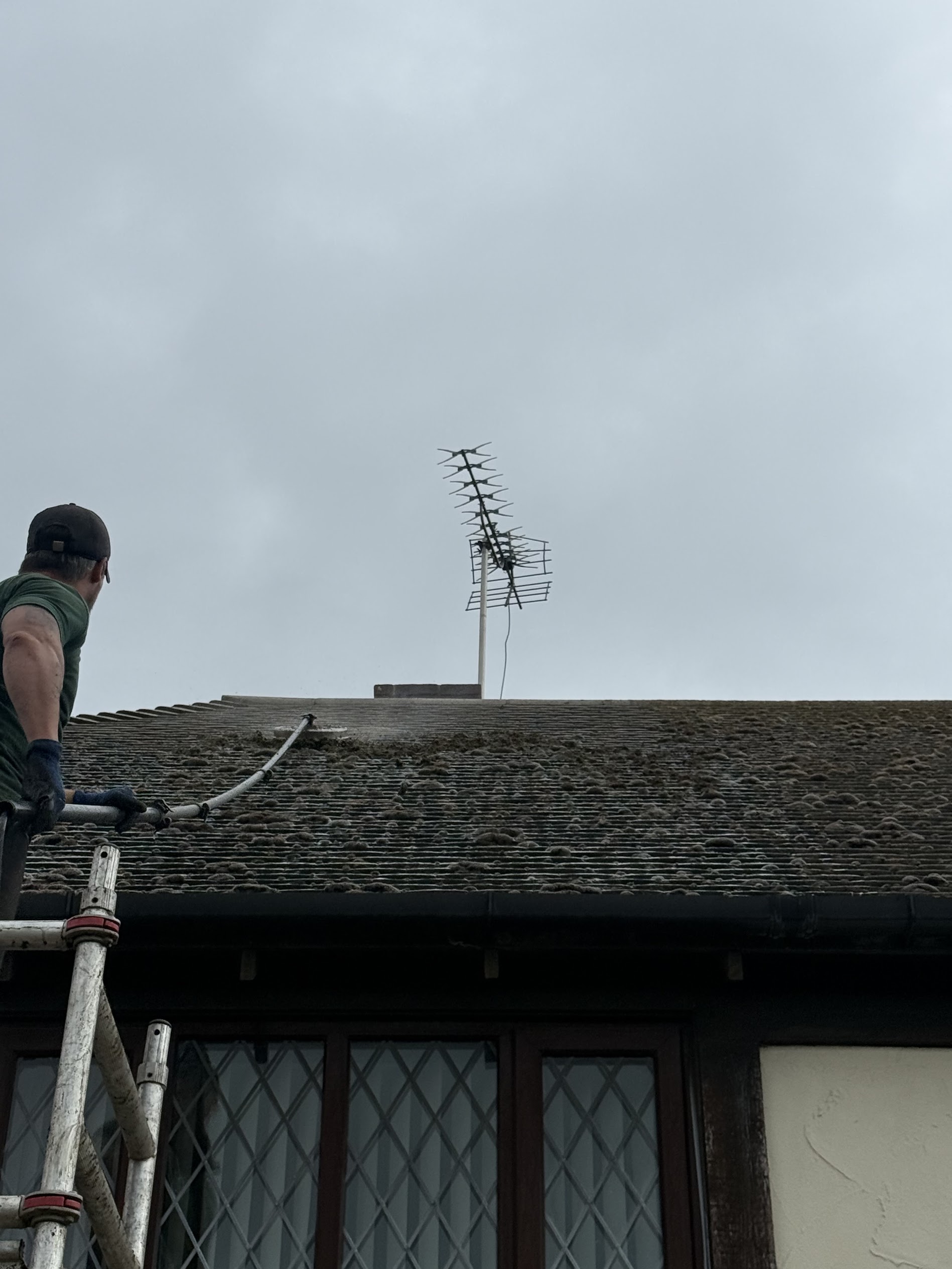
Roof cleaning removes moss, algae and built-up grime to keep your roof looking good and well maintained. The right time, method and a reputable cleaner all make a big difference.
It is the question every homeowner with a mossy roof eventually asks: can I just do this myself? The honest answer is that some of it you can, and some of it you really should not. This guide separates the two, so you can decide where your effort and money are best spent.
The honest answer up front
You can clear loose moss from a low, easily-reached single-storey roof from a stable ladder, and you can treat a roof from the ground with a biocide sprayer if the product allows it. What you cannot safely do — and should not attempt — is pressure wash a pitched roof from a ladder, walk an unprotected roof edge, or apply a chemical you have not read the data sheet for.
The line between 'I can do this' and 'this needs a professional' is drawn by height, pitch, access and the method involved. Most roof cleaning that is worth doing — the kind that actually extends the life of the roof — sits on the professional side of that line. That is not a sales pitch; it is physics and safety.
What a homeowner can genuinely do themselves
There is a narrow band of roof maintenance that is reasonable to do yourself, and it is worth knowing where it sits. None of it involves walking on the roof.
Even these have a catch. A biocide is a pesticide, and using it means reading the label, wearing the right PPE, and keeping people and pets off the area until it has dried. The cheapest product on the shelf is rarely the right one — our roof biocide treatment guide explains what a proper treatment actually involves.
- Clearing loose moss and leaves from a low, single-storey roof using a long-reach brush from a stable, footed ladder — never from the roof itself.
- Treating a roof from the ground with a biocide designed for low-pressure or pump-sprayer application, where the label and data sheet permit it.
- Keeping gutters and downpipes clear, which does more to protect a roof than most people realise.
- Trimming back branches that overhang the roof, which reduces the leaf load and the moss that follows it.
What you should never do yourself
The jobs below are where DIY roof cleaning turns into a fall, a damaged roof, or a chemical incident. They are the reason professional roof cleaning exists.
- Pressure washing a pitched roof from a ladder. The recoil pushes you off the ladder, the jet strips the granules off concrete tiles, and the water gets driven under the tiles into the felt.
- Walking on a pitched roof without edge protection and a harness. Roof falls are one of the most common serious domestic accidents, and a mossy roof is the slipperiest surface there is.
- Scraping moss off tiles with a sharp tool. It lifts the granules that protect the tile and shortens the roof's life — the exact opposite of what cleaning is meant to do.
- Applying a strong chemical without reading the data sheet. The wrong dilution or the wrong product will stain render, kill planting below, and void any roof warranty.
- Working at height alone, or on a wet or frosty roof. There is no margin for error and no one to help if something goes wrong.
The real cost of doing it yourself
People weigh DIY against the price of a professional clean and conclude it must be cheaper. The comparison is rarely that simple, because the DIY price tag hides a long list of costs that only show up when you add them honestly.
A ladder that is tall enough and safe enough for roof work is not the one in most garages. A biocide that actually works is not the £9 bottle from a supermarket. A sprayer that reaches a two-storey roof from the ground is a piece of equipment, not an afterthought. And the value of a weekend — plus the risk of a fall that costs far more than any clean — belongs in the sum too.
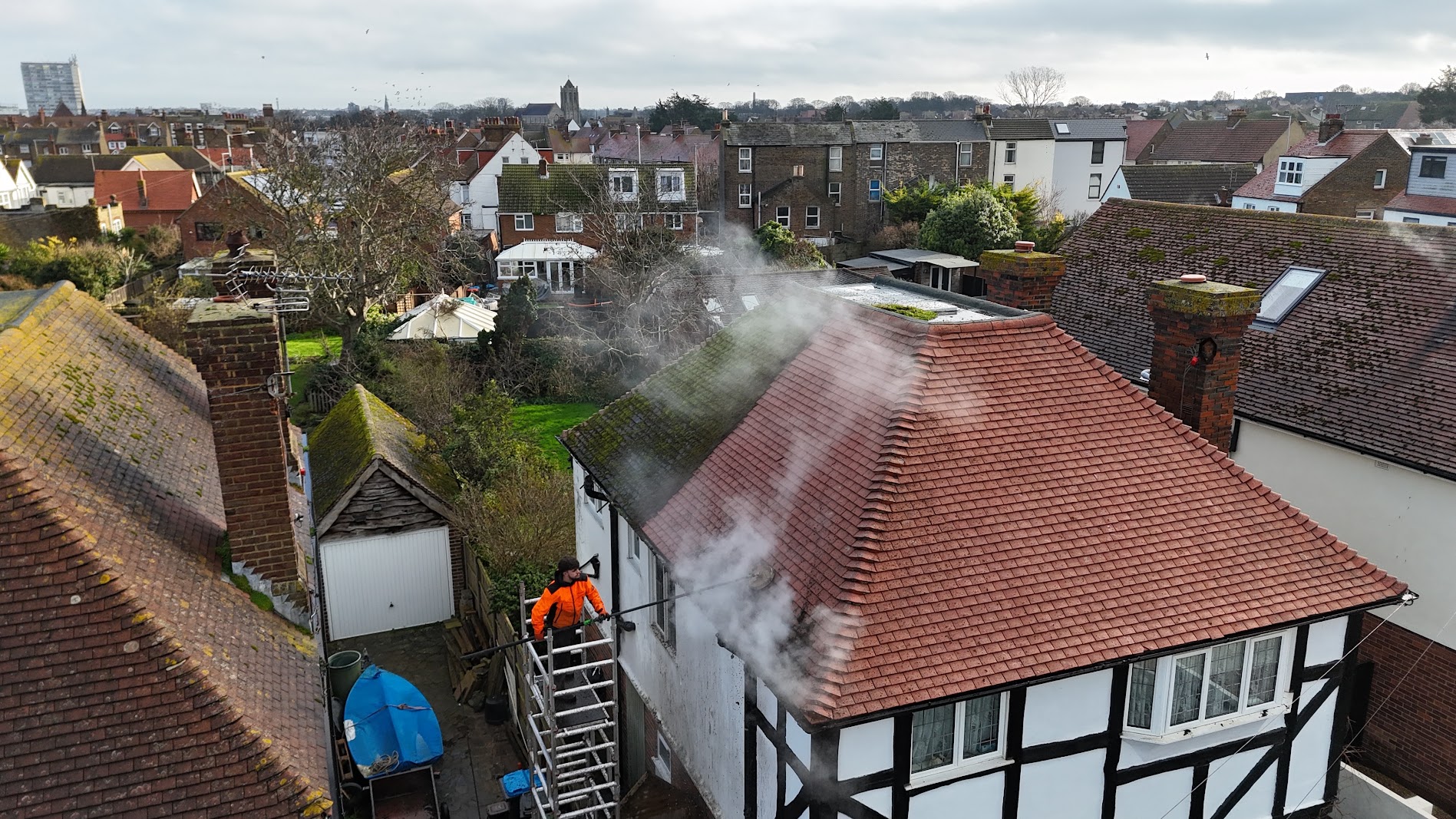
Take a look at the photo above from UnderPressureKent: that is a dedicated mobile scaffold tower with proper working platforms, a steam-generation rig, and low-pressure delivery heads. A setup like that costs thousands to buy or hundreds a week to hire. When you price the proper access equipment, the correct biocide or steam plant, and your own time, the gap between DIY and professional narrows considerably. The professional quote also brings public liability insurance and a finish that lasts. See our roof cleaning cost guide for realistic UK pricing.
When DIY genuinely makes sense
There are situations where doing it yourself is the sensible call, and it is only fair to name them. If you have a low, flat or gently-pitched single-storey roof — a porch, a garage, a small extension — and you already own a safe means of access, a light clearance and a ground-applied biocide is a reasonable job to take on.
It also makes sense as a stop-gap. If you are waiting for a professional quote and want to keep the gutters clear in the meantime, that is sensible maintenance. The mistake is treating a stop-gap as a substitute for the real thing, because the moss will be back, and the underlying growth will not have been treated.
The verdict
If your roof is single-storey, low, and safely reachable, a careful homeowner can do the light maintenance. If your roof is two storeys, pitched, mossy, or needs pressure-free treatment done properly, the risk and the equipment cost make a professional the right call — and usually the cheaper one once everything is counted.
The cleanest way to decide is to get a free quote and see what a professional would actually charge. There is no obligation to book, and you will at least know what the job is worth before you spend a weekend on a ladder. Read our guide to how our quote service works to see what to expect.
FAQs
Get a roof cleaning quote
Compare local, trusted roof cleaning professionals and get a free, no-obligation quote for your home.
One local roof cleaner. No obligation to book.
Related homeowner guides
Does Roof Cleaning Damage Tiles?
Expert UK advice on methods, costs and protecting your roof tiles.
Roof Biocide Treatment Explained
Expert UK advice on methods, costs and protecting your roof tiles.
What If Roof Moss Returns?
Expert UK advice on methods, costs and protecting your roof tiles.
Written & reviewed by
Andrew Hampton
Roofcleaning.uk editor
Andrew Hampton has spent the last seven years working in the gutter and roof cleaning industry, helping homeowners across the UK understand what a proper clean involves, what it should cost, and how to spot a reliable contractor. He edits every guide on Roofcleaning.uk to make sure the advice is practical, up to date, and written in plain English.
- 7+ years in the gutter cleaning and roof cleaning industry
- Edits and reviews every homeowner guide published on Roofcleaning.uk
- Works directly with approved contractors to keep pricing and methods accurate
Last reviewed 1970 · Roofcleaning.uk editorial team