Roof cleaning removes moss, algae and built-up grime to keep your roof looking good and well maintained. The right time, method and a reputable cleaner all make a big difference.
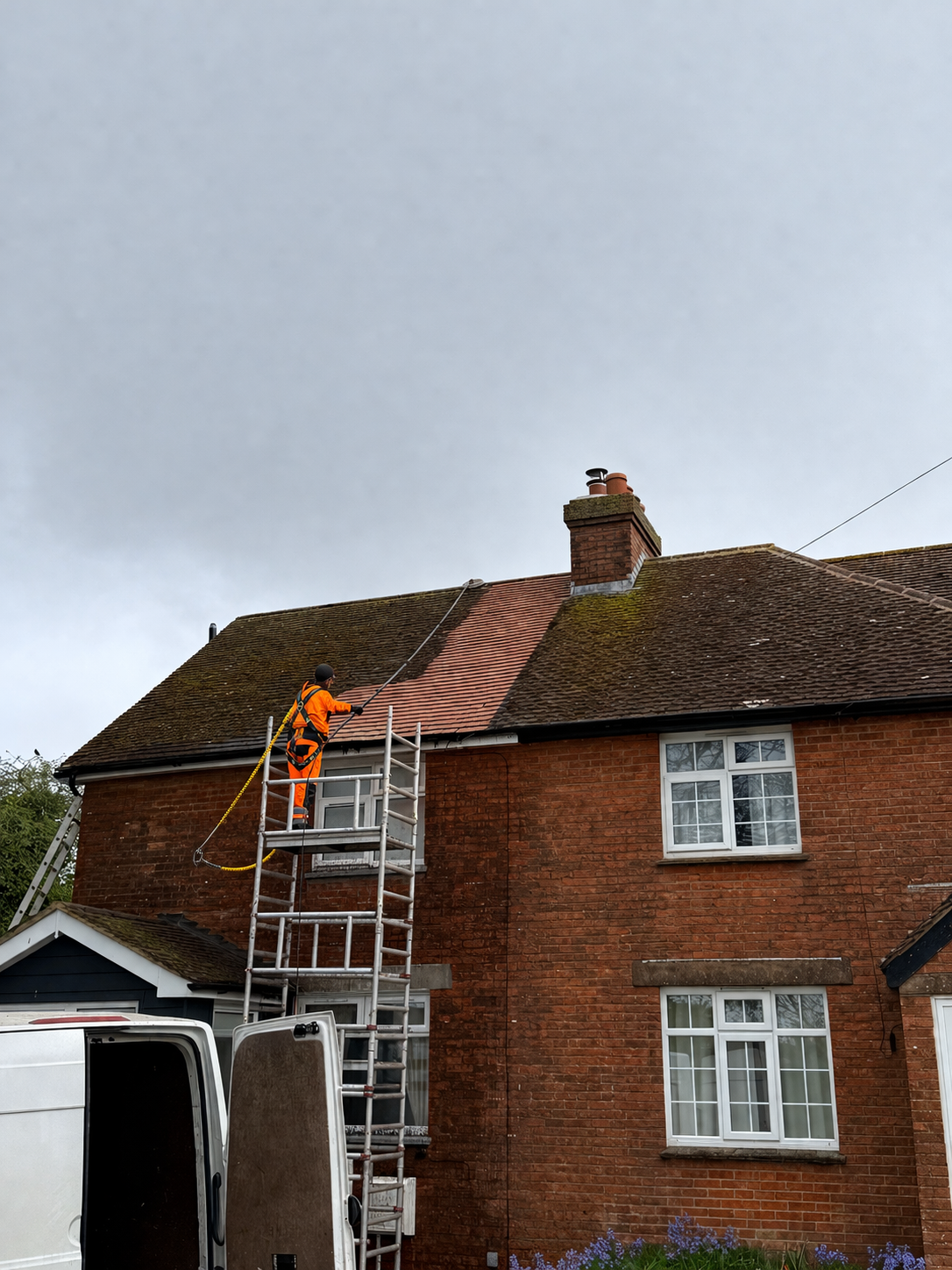
Shade, damp and wind direction explain uneven moss. The shaded slope stays wetter for longer and regrows faster.
Shade and damp: why one slope grows more
North-facing slopes and elevations shaded by nearby trees or neighbouring buildings dry out much more slowly after rain. That persistent damp creates the ideal damp, sheltered environment for moss spores to take root and flourish.
The opposite slope, facing south or catching the prevailing breeze, dries out quickly in the sun and rarely develops the same heavy moss covering. Over a few years this creates a dramatic contrast: one side can be thick with green moss while the other looks almost completely clean.
It is not just the direction your roof faces that matters. Anything that blocks light or traps airflow — a tall neighbouring property, a dense conifer, a chimney stack that casts a shadow across one pitch — produces the same effect. Moss is opportunistic: it settles wherever the surface stays damp long enough for spores to germinate, and it thrives where the sun never quite dries the tile out.
Wind direction and rain splash
Prevailing wind plays a part too. In much of the UK the wind drives rain in from the south-west, so the windward slope gets the wettest. Moss spores travel on the breeze and settle where conditions suit them — damp, sheltered and undisturbed. Over time the windward or shaded pitch builds up a thick green mat while the lee slope stays comparatively clean.
Rain splash also contributes. Where water runs down a valley or drips from a chimney, the tiles below stay damp for longer after each shower. Moss takes hold in those persistently wet channels and spreads outward from them, which is why the growth often starts at valleys, around chimneys and along the edges of dormers.
Why the tile makes a difference
The covering itself affects how mossy a roof becomes. Rough-textured concrete tiles and weathered clay tiles hold moisture and organic matter in their surface, giving spores a foothold. Smooth modern tiles and well-maintained slate shed water faster and tend to stay cleaner for longer between cleans.
Older roofs with pitted or granular surfaces are the most vulnerable. Once moss gets established in the texture of the tile, it holds even more water against the surface — which speeds up frost damage in winter and shortens the life of the covering. Our guide to roof cleaning by material explains how the covering should shape the cleaning approach.
Should you clean just one side or both?
Homeowners often wonder whether to treat only the mossy slope to save money. While you can clean just the affected pitch, contractors generally advise treating both slopes with a preventative biocide so the cleaner side does not develop moss a season or two later. The shaded slope will always be more prone to regrowth, but a biocide applied across the whole roof slows it everywhere.
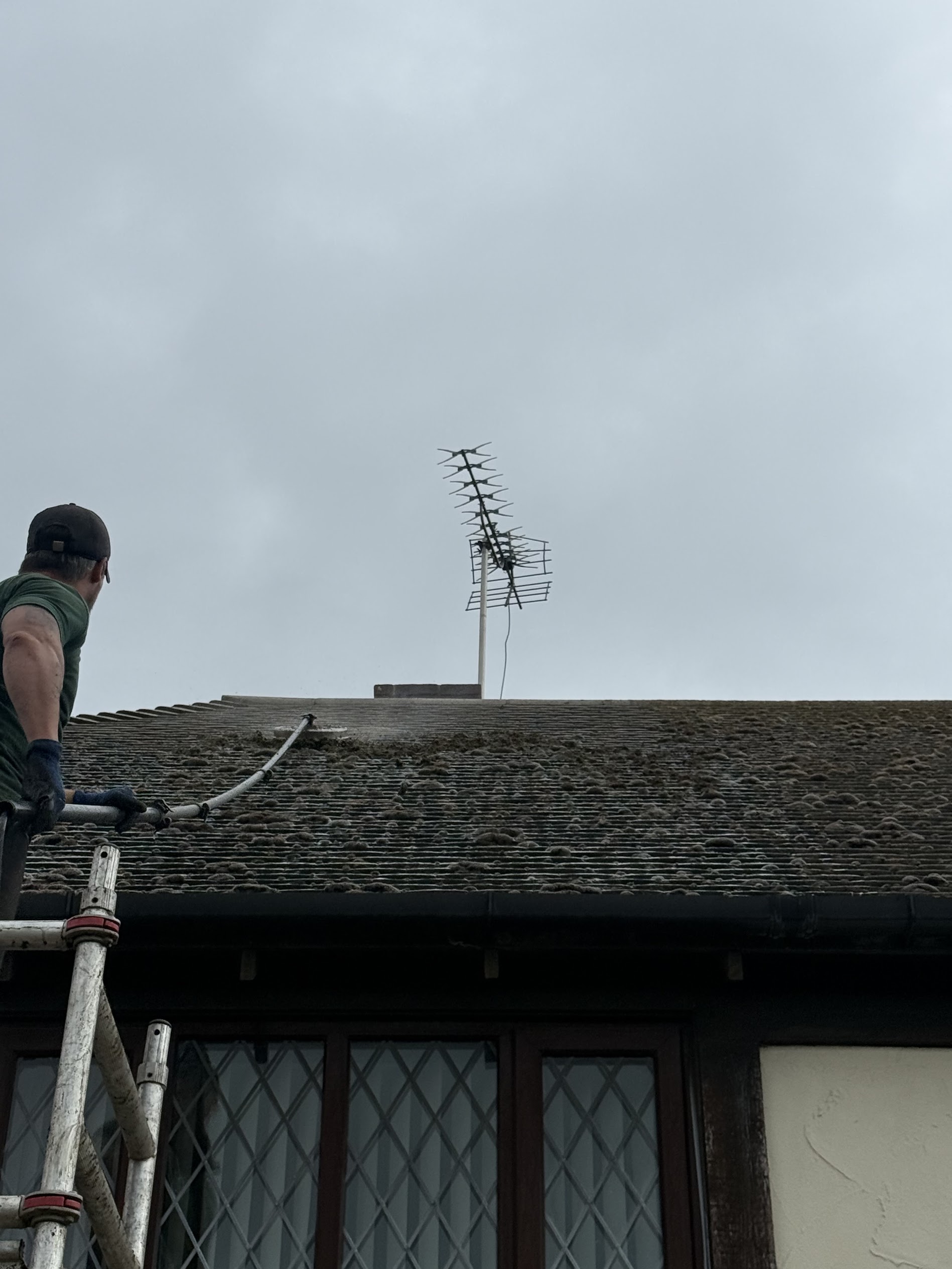
Take a look at the photo above: working from a secure tower with an extended lance allows the operator to clear the heavy growth course by course without walking on the tiles, keeping the roof structure completely safe. That access method matters as much as the cleaning product — the last thing you want is cracked tiles on the slope you were trying to protect.
Slowing regrowth on the shaded side
You cannot change which way your roof faces, but you can reduce the factors that speed up regrowth. Trimming back overhanging branches that shade the roof and drop debris makes a real difference — more light and less organic matter mean fewer spores and less to root into. Clearing gutters and valleys so water runs freely also helps, because standing water in a shaded gutter is perfect moss habitat.
A biocide treatment applied after cleaning is the single most effective way to slow the return of moss on a naturally damp slope. It does not stop regrowth forever — nothing does in the UK climate — but it adds years between cleans rather than months. Our roof biocide treatment guide explains what it does and what to ask for on the quote.
- Trim overhanging branches that shade the roof and drop debris.
- Keep gutters and valleys clear so water does not pool in shaded channels.
- Ask for a biocide treatment across the whole roof, not just the mossy slope.
- Inspect the shaded pitch each autumn — early regrowth is easy to treat before it thickens.
FAQs
Get a roof cleaning quote
Compare local, trusted roof cleaning professionals and get a free, no-obligation quote for your home.
One local roof cleaner. No obligation to book.
Related homeowner guides
Roof Moss Removal: Methods, Costs and When to Act
Expert UK advice on methods, costs and protecting your roof tiles.
What Happens on Roof Cleaning Day
Expert UK advice on methods, costs and protecting your roof tiles.
How Often Should a Roof Be Cleaned?
Expert UK advice on methods, costs and protecting your roof tiles.
Written & reviewed by
Andrew Hampton
Roofcleaning.uk editor
Andrew Hampton has spent the last seven years working in the gutter and roof cleaning industry, helping homeowners across the UK understand what a proper clean involves, what it should cost, and how to spot a reliable contractor. He edits every guide on Roofcleaning.uk to make sure the advice is practical, up to date, and written in plain English.
- 7+ years in the gutter cleaning and roof cleaning industry
- Edits and reviews every homeowner guide published on Roofcleaning.uk
- Works directly with approved contractors to keep pricing and methods accurate
Last reviewed 1970 · Roofcleaning.uk editorial team