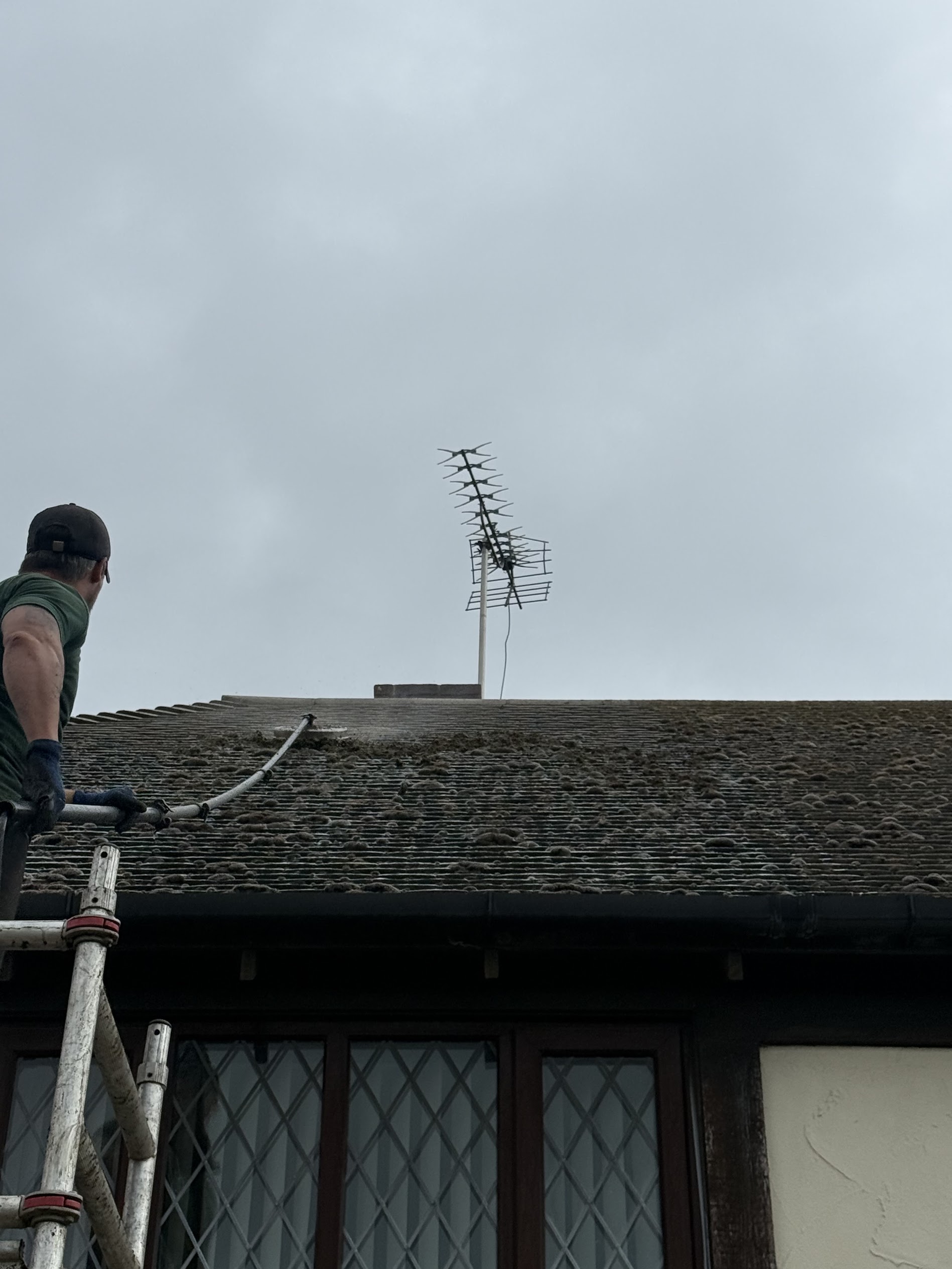
Roof cleaning removes moss, algae and built-up grime to keep your roof looking good and well maintained. The right time, method and a reputable cleaner all make a big difference.
Winter roof cleaning is possible in the UK, but cold, wet weather changes what can safely be done. This guide explains when winter cleaning makes sense, when it is better to wait, and how to protect your roof through the wettest months.
Can a roof be cleaned in winter?
Yes — in much of the UK a roof can be cleaned during winter, but the approach has to change. Shorter days, lower temperatures and regular rain all affect which methods are safe and how well the work lasts. The question is not really whether winter cleaning is possible, but whether it is the right choice for your roof right now.
A good contractor will look at the forecast, the covering and the condition before committing to a date. If the weather or temperature makes the job risky, a reputable cleaner will say so and suggest a better window rather than push ahead. That honesty is one of the things to look for when choosing a roof cleaning company.
How weather and temperature affect the work
Most roof cleaning methods rely on water, and water behaves differently in cold weather. Pressure washing and soft washing both struggle when the surface is icy or when rain is washing the treatment away before it can work. Biocide treatment in particular needs a dry spell and a surface temperature warm enough for the chemical to do its job — usually around 8–10°C or above.
High winds make working at height unsafe, and frost makes tiles brittle and slippery. A contractor using platforms or scaffolding will be far more cautious about gusts and ice than one working in summer. If the forecast is poor, rescheduling is the sensible call, not a sign of a difficult customer.
Which methods suit winter best
Manual moss removal is the most winter-friendly part of the job. Physically clearing heavy growth, brushing out valleys and clearing gutters can be done in cooler, drier conditions without relying on chemicals. It is also the part that matters most over winter, when wet moss holds moisture against the tiles and blocks drainage.
Chemical treatment and biocide treatment are more weather-dependent. They need a dry surface and a stretch of dry days to work properly, which is harder to guarantee between November and February. Pressure washing is generally best avoided in freezing conditions, both for the roof and for the runoff freezing on paths and drives below.
Why winter moss growth matters
Moss thrives in the damp, shaded conditions a British winter provides. If your roof already has growth, leaving it through the wettest months means it keeps holding water against the tiles, which can speed up frost damage as that moisture freezes and thaws. Reading our roof moss removal guide explains why tackling heavy growth before the worst weather arrives is often worthwhile.
You may also notice moss spreading more on one side of the roof. Our article on why moss grows on one side of a roof covers the role of shade, prevailing rain and nearby trees — all factors that matter more when the roof stays wet for weeks at a time.
When it is better to wait until spring
If your roof only has light staining and no significant moss, there is little urgency to clean in winter. Waiting for a drier, warmer spell usually gives a longer-lasting result because treatment can work properly and dry evenly. Our guide to how often a roof should be cleaned can help you judge whether the work can sensibly wait.
Equally, if a contractor is happy to push ahead in poor conditions without explaining the risks, treat that as a warning sign. A written quote should set out the method, the access and the weather contingency — the same checks you would make at any time of year, covered in our quote checklist and comparison sheet.
Protecting your roof through winter
- Clear gutters and valleys before the wettest weather so water can drain freely.
- Trim back branches that shade the roof and drop debris, which feeds moss growth.
- Book a roof inspection if you have not had one recently — small issues are cheaper than winter leaks.
- If moss is heavy, ask about manual removal now and chemical treatment in a drier month.
- Keep an eye on flashing and ridge tiles after storms; wind and frost loosen them over time.
FAQs
Get a roof cleaning quote
Compare local, trusted roof cleaning professionals and get a free, no-obligation quote for your home.
One local roof cleaner. No obligation to book.
Related homeowner guides
Roof Moss Removal
Expert UK advice on methods, costs and protecting your roof tiles.
How Often Should a Roof Be Cleaned
Expert UK advice on methods, costs and protecting your roof tiles.
Does Roof Cleaning Damage Tiles
Expert UK advice on methods, costs and protecting your roof tiles.
Written & reviewed by
Andrew Hampton
Roofcleaning.uk editor
Andrew Hampton has spent the last seven years working in the gutter and roof cleaning industry, helping homeowners across the UK understand what a proper clean involves, what it should cost, and how to spot a reliable contractor. He edits every guide on Roofcleaning.uk to make sure the advice is practical, up to date, and written in plain English.
- 7+ years in the gutter cleaning and roof cleaning industry
- Edits and reviews every homeowner guide published on Roofcleaning.uk
- Works directly with approved contractors to keep pricing and methods accurate
Last reviewed 1970 · Roofcleaning.uk editorial team